 |
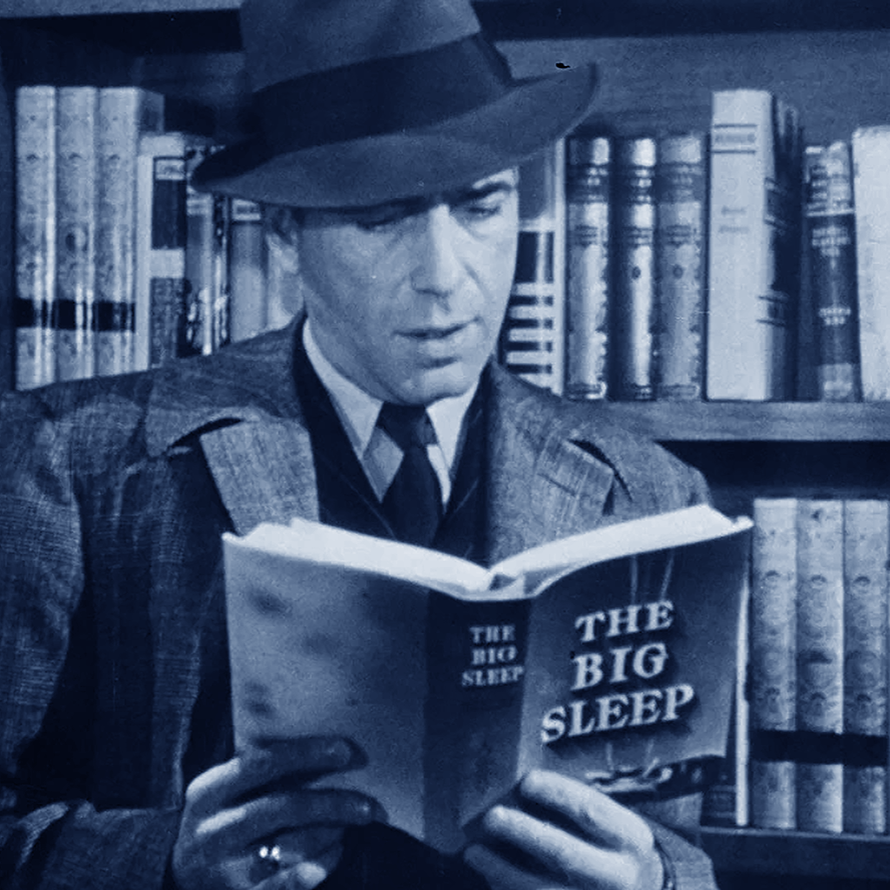
| A meta moment: Humphrey Bogart playing detective Philip Marlowe in the film adaptation of The Big Sleep reads a copy of The Big Sleep |
The Mystery of Mysteries
One of the enduring wonders of the reading life is knowing that a limited number of story structures exist, yet writers have, for thousands of years, found new ways to tell them.
This is especially true of genre fiction, where plot beats are subject to additional constraints. Romances, by definition, must center the sprouting and inevitable bloom of a romantic relationship. Action and Adventure novels must feature a seemingly insurmountable obstacle that arises just when things seem to be going the heroine's way, and, of course, a mystery novel must wrap all the clues up into a satisfying solution.
When you crack open a mystery, you know by the final page the pieces will come together like an expertly made cocktail, but along the way there is sure to be a bit of muddling, some carefully calibrated ingredients in precise order, a dash of some eyebrow-raising spirit that you frankly don't taste at all in the finished drink, and a vigorous shaking to blend everything together.
Everyone who reads mysteries competes against the story's detective to solve and explain the crime first. To do that well, we have to pay close attention not only to the facts of the case, but also to the strategies and ploys the author uses to keep us guessing. We, in effect, read mysteries on multiple levels: the level of plot and character development and on what might be called a mechanistic level. We ask why the author chose to reveal a detail on this page, and if a plot point is relevant or misdirection. We are, of course, always on the lookout for the red herrings.



 Gulf Coast Reads 2025: The Faculty Lounge
 This blog was contributed by Anjela M. Youth Services Assistant Manager in Harris County Public Library's Programs, Partnerships & Outreach Division.
 Gulf Coast Reads Is About Community
 On Friday Wendy W. from