


How Mystery Writers Keep Us Guessing
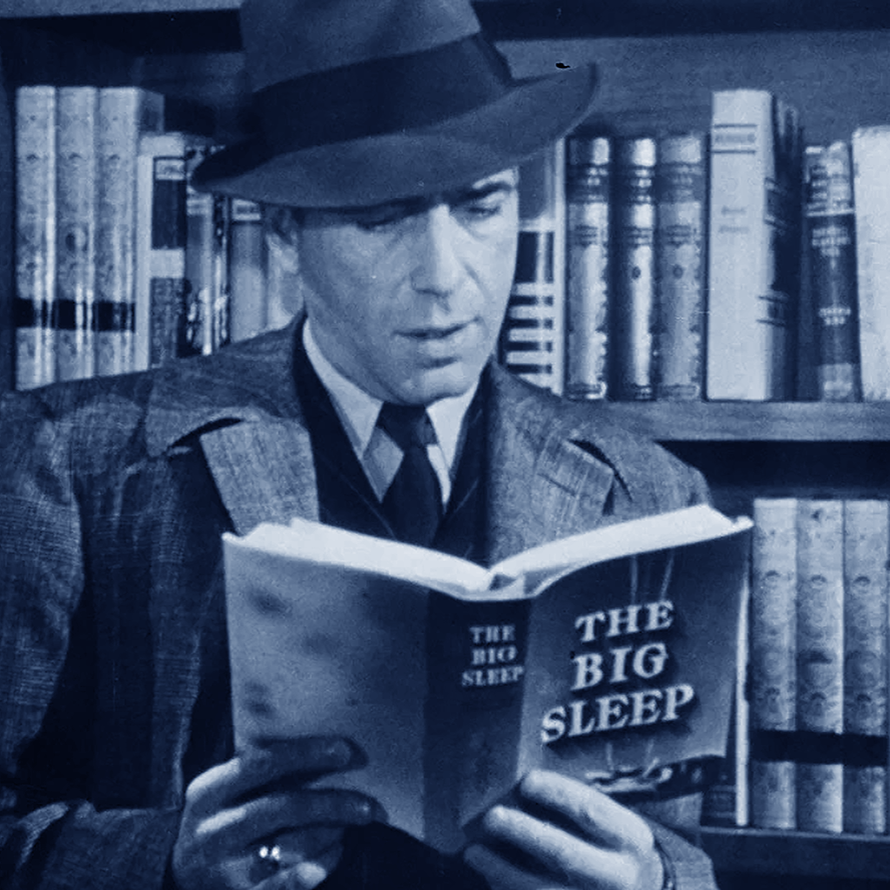 |
| A meta moment: Humphrey Bogart playing detective Philip Marlowe in the film adaptation of The Big Sleep reads a copy of The Big Sleep |
The Mystery of Mysteries
One of the enduring wonders of the reading life is knowing that a limited number of story structures exist, yet writers have, for thousands of years, found new ways to tell them.
This is especially true of genre fiction, where plot beats are subject to additional constraints. Romances, by definition, must center the sprouting and inevitable bloom of a romantic relationship. Action and Adventure novels must feature a seemingly insurmountable obstacle that arises just when things seem to be going the heroine's way, and, of course, a mystery novel must wrap all the clues up into a satisfying solution.
When you crack open a mystery, you know by the final page the pieces will come together like an expertly made cocktail, but along the way there is sure to be a bit of muddling, some carefully calibrated ingredients in precise order, a dash of some eyebrow-raising spirit that you frankly don't taste at all in the finished drink, and a vigorous shaking to blend everything together.
Everyone who reads mysteries competes against the story's detective to solve and explain the crime first. To do that well, we have to pay close attention not only to the facts of the case, but also to the strategies and ploys the author uses to keep us guessing. We, in effect, read mysteries on multiple levels: the level of plot and character development and on what might be called a mechanistic level. We ask why the author chose to reveal a detail on this page, and if a plot point is relevant or misdirection. We are, of course, always on the lookout for the red herrings.
A Solid Structure with Lots of Moving Parts
Mysteries, like most of the stories humans find most satisfying, follow a simple structure.
- An inciting action (say, a murder)
- A series of obstacles and false resolutions
- A climactic finale in which the truth is revealed
That's it. Mysteries are really that simple. Really great mystery writers take that basic structure, tell the story with a fresh voice, populate it with compelling characters, and invent new kinds of obstacles, from purely psychological to demonically complex systems arrayed against the protagonist.
 |
| Tile street marker on Mystery Street in New Orleans. As is perhaps fitting, no one knows how or why it got its name. |
How Whodunits Are Done
Lots of Characters
Now, it need not be a cast of thousands. The writer just needs enough folks to make a reasonably sized dinner party or maybe just enough to fit comfortably in the first-class car of a locomotive hissing and lurching out of the station in Istanbul bound for Paris. This allows the author to spread the suspicion around a bit, and it doesn't hurt if all or most of those characters have something to hide.
The trick is to give each suspect a plausible motive, a believable opportunity, and a personality distinct enough that readers can keep everyone straight. A good mystery makes us suspicious of nearly everyone without making the eventual solution feel arbitrary. The culprit should be someone we could have suspected all along, even if we didn't.
Murky Pasts
Dark pasts, personal quirks, and accidents of history make characters more interesting, but they can also build motive for murder.
One thing is fairly certain: if the author gives a character the chance to tell their own backstory during, say, a boozy evening jouncing across the desert in the back of a pickup truck with the detective, they will not turn out to be a particularly reliable narrator. Of course, closely related to that is the fact that...
Nobody Is Telling the Truth (or at Least Not the Whole Truth)
Mystery writers understand that people are complicated creatures. They lie to protect themselves, to protect others, to hide embarrassing mistakes, or simply because they prefer the version of events in which they look better. A character might be perfectly honest about where they were at 3 a.m on the Tuesday of the 11th, but lie like a rug about why they were there.
This is where a writer's understanding of human nature pays off. The detective may be investigating a murder, but the reader is also investigating a collection of human beings, each with their own secrets and private agendas. Not every lie points to the killer. Sometimes the person hiding an affair, a debt, or a long-buried family scandal is just trying to keep their personal life personal.
Of course, that doesn't mean we should let them off the hook. In a mystery, almost everyone is a potential suspect until proven otherwise.
 |
| The term red herring comes from the historical practice of using pungent, strongly scented smoked fish to distract or train hunting dogs. In mystery and detective fiction, a red herring is a deliberate false clue, piece of gossip, or suspicious character meant to trick both the protagonist and the audience |
Red Herrings
A red herring is a false clue planted to send the reader—and often the detective—down the wrong path. It might be a suspicious character, a seemingly damning piece of evidence, or a behavior that looks incriminating until we learn more.
The trick is to make the misdirection plausible. If a writer points an accusing finger at someone for no reason, readers will see through it. But give that person a motive, a history of bad decisions, and an unfortunate habit of sneaking around at midnight, and we're likely to suspect the worst.
Red herrings are part of the fun, but they must be handled carefully. Too few, and the solution is obvious. Too many, and readers may feel the author is simply making things up as they go along. The best misdirection gives us a perfectly reasonable explanation for what we've seen—just not the right one.
Behavioral Clues
Not all clues come in the form of fingerprints, footprints, or that cryptic note hidden in the hatband of the victim's dented and blood-bespeckled fedora. Sometimes the most revealing evidence is a character's behavior.
A person who suddenly changes their routine, dodges a seemingly harmless question, or reacts a little too strongly to an ordinary remark might be hiding something. Perhaps they know more than they should. Perhaps they're frightened that someone else will discover a secret. Or perhaps they're simply an awkward person having one of those days.
The clever writer gives us enough to notice without making the clue so obvious that the mystery evaporates. A nervous glance or an unexpected silence might mean nothing on its own. In retrospect, though, it can become one of those details that makes us slap our foreheads and say, "Of course!"
Foreshadowing and Chekhov's Gun
Mystery writers must constantly balance what readers know against what they think they know. Foreshadowing is one way to manage that balance: a subtle hint early in the story suggests something that will become important later.
A character makes an oddly specific remark. A door is mentioned that seems to have no particular significance. Someone takes an unusual interest in an otherwise unremarkable object. These details may slip past us on the first reading, but they gain meaning as the story unfolds.
Closely related is Chekhov's gun, a principle of storytelling often summarized this way: if a gun appears on the wall in the first act, it should go off by the third. The idea is that details introduced into a story should serve a purpose rather than clutter the narrative.
Mystery writers have to be especially good at this. They must plant clues early enough to make the solution fair, but quietly enough that we don't immediately recognize their importance. The best details are hiding in plain sight, waiting for us to understand what we've been looking at all along.
The Bad Guys
A mystery needs more than a clever detective and a collection of suspicious characters. It needs an antagonist who can give the protagonist a real challenge. And the most formidable villains aren't always the ones who look the part.
They may be brilliant, charismatic, wealthy, politically connected, or convinced that their actions are morally justified. They might have the power to intimidate witnesses, bury evidence, manipulate public opinion, or make the detective's life miserable without ever breaking a sweat.
Sometimes the most dangerous villain is the one everyone else admires. Sometimes the person doing terrible things believes they're the hero of the story. These complications make for richer mysteries because they force us to look beyond appearances and question who gets to define right and wrong.
A worthy antagonist also raises the stakes. Solving the crime may be only the beginning if the person responsible has the resources to keep the truth from coming out.
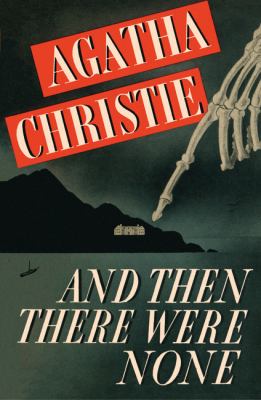 |
| First US edition cover art of Agatha Christie's classic "closed circle" mystery And Then There Were None |
Changing the Rules Without Breaking Them
The basic mystery formula is remarkably flexible. Writers can rearrange its moving parts, introduce unusual constraints, or build an entire story around a puzzle that seems impossible to solve.
Structural Frameworks
Some mysteries rely on familiar setups that create their own special challenges.
Locked Room
A crime takes place in a seemingly impossible, sealed location. The puzzle shifts from who did it to how it was physically possible. If no one could have entered or escaped, how did the crime happen?
A Ticking Clock
An artificial time limit adds urgency. The detective must catch the killer before the train docks, stop a bomb before it detonates, or uncover the truth before an innocent person pays the price.
A Circle of Suspects
A closed group of characters keeps the possibilities manageable while concentrating the tension. Everyone has a documented motive and opportunity, and no one can simply disappear into a crowd. A country house, a remote island, or a stranded train can become a pressure cooker of competing stories and growing suspicion.
These frameworks give writers a familiar starting point, but the possibilities within them are endless. The locked room might involve a seemingly impossible murder, the ticking clock might force a detective to make a terrible choice, and the circle of suspects might contain people whose secrets are more dangerous than the crime itself.
The Secret Ingredient
Readers, it must be said, have an advantage over fictional mystery solvers. We bring our knowledge of how writers work, and the more mysteries we've read, the more experience we have to draw on. We know to watch for the oddly specific detail, the character who protests a little too much, and the seemingly unimportant conversation that turns out to matter enormously.
Back at the beginning of this piece, I could have used any number of metaphors for craft—lacemaking, cabinetry, or basketweaving—but frankly, I don't know anything about those things. I do, however, know a stellar Manhattan or Vodka Gibson when I taste one.
The point is that all bartenders and mystery writers use the same tools and ingredients, but some are just better than others because, as with anything that takes skill, some practitioners have an extra something. We call it by many vague names: gift, touch, magic, because no one knows exactly what it is, but we all know it when we taste it or read it on the page.
And that's the real mystery. We can identify the techniques, admire the structure, and congratulate ourselves when we spot a clue before the detective does. But we can't always explain why one writer's familiar ingredients combine to make something extraordinary while another's leave us unmoved.
Perhaps that's part of why we keep coming back. A great mystery gives us a puzzle to solve, a world to inhabit, and a chance to be surprised—even when we've spent the whole book trying to prevent exactly that.
This year's Gulf Coast Reads selection, The Librarians by Sherry Thomas, offers readers a chance to enjoy the pleasures of a library-centered mystery. As you read, keep an eye on the characters, the clues, and the details that seem just a little too carefully placed. You might figure things out before the final reveal. Then again, a good mystery writer knows exactly how to keep us guessing.


